
Ajita Insights | An analysis of the 2024 Nobel Prizes in Physics and Chemistry: Why the automation of discovery marks the end of the human scientific monopoly.
Historically, the Nobel Prize has been the ultimate recognition of human clairvoyance—the ability of a singular mind to peer into the fundamental laws of nature. However, the 2024 Nobel Prizes in Physics and Chemistry have sent a seismic signal to the world: We have entered an era where the greatest discoveries are no longer born from human intuition, but from algorithmic optimization.
At The Ajita, we view these awards not merely as accolades, but as a definitive shift in Epistemic Sovereignty.
1. The Physics of Information: From Atoms to Latency
The 2024 Nobel Prize in Physics, awarded to John Hopfield and Geoffrey Hinton, did not just honor artificial neural networks; it honored a new methodology of reality.
Traditional physics studied tangible entities—matter and energy. Modern physics, under the guidance of AI, now studies the Structure of Information. This award affirms that reality is essentially a vast data set, and those who possess the superior algorithms to process this data now hold the "Keys to the Universe." We are witnessing the transition from physical observation to computational derivation.

2. AlphaFold and the Aesthetic of Total Optimization
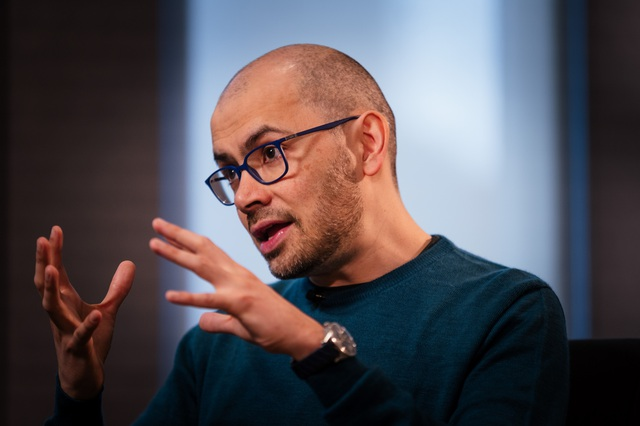
The Nobel Prize in Chemistry awarded to Demis Hassabis and the Google DeepMind team for AlphaFold is a classic manifestation of The Aesthetic Strategist.
By solving the 50-year-old "protein folding problem," AlphaFold bypassed decades of manual trial-and-error in the lab.
- Efficiency as a Strategic Weapon: What humans took half a century to explore, AI resolved in a matter of weeks.
- The New Alchemy: This is no longer traditional science; it is Totalist Optimization. When AI can predict life at a molecular level, it becomes the ultimate tool for shaping the biological assets of the future.
3. The Strategic Risk: The Patent of Nature
When AI becomes the "co-author" of Nobel-level discoveries, we face a critical question of legacy stewardship: Who owns the resulting knowledge?
If the laws of nature are decoded by proprietary algorithms owned by private corporations, the collective intellectual heritage of humanity risks being privatized. This represents a systemic risk to National Sovereignty and Academic Freedom. At Ajita, we must ask: Can a nation maintain its leadership position if its intellectual infrastructure is entirely dependent on imported AI models?
4. The Ajita Note: Legacy in the Age of Silicon
The Nobel Prizes of 2024 prove that Legacy is no longer built solely through blood, history, or the handwritten word. In the 21st century, legacy is built through Code.
The laureates of today are the architects of the Silicon era. They are not just discovering reality; they are building a new one—where machine intelligence acts as the gatekeeper to nature's secrets. For the modern strategist, the lesson is clear: To hold power in the future, you must not only own the resources but also the Algorithms that decode them.
Strategic Takeaway: The Nobel Prize has evolved from a celebration of human genius into a recognition of algorithmic supremacy. The game remains the same, but the players are no longer exclusively human.


