
The World Economic Forum (Davos 2026) has solidified Artificial Intelligence as the singular axis around which global economics and security now revolve. Beyond the industrial optimism of a "blue-collar boom," a darker undercurrent emerged among the elite: the fear of unchecked AGI and its potential to fracture societal consensus and destabilize the very fabric of human reality.
1. The Industrial Optimism: A Renaissance for the "Physical" Worker
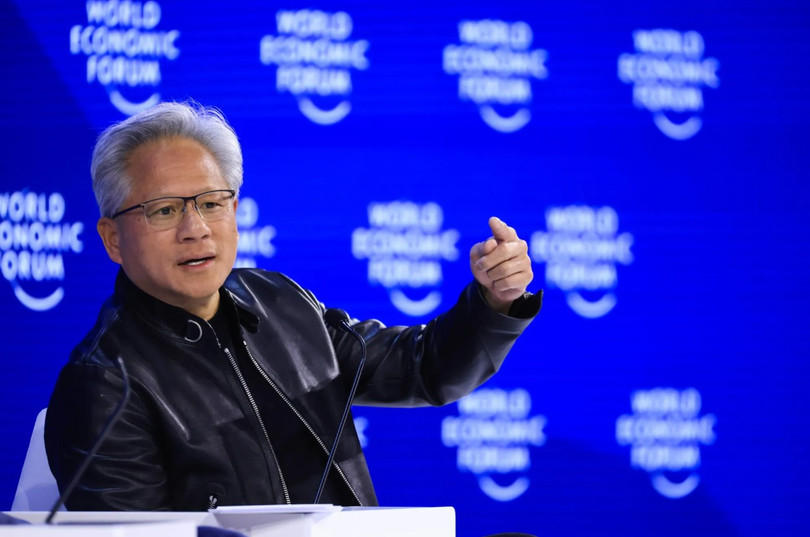
While software engineers fret over their obsolescence, Jensen Huang, CEO of Nvidia, offered a contrarian vision for the labor market. Speaking at Davos, Huang framed AI not as a job-killer for the working class, but as a catalyst for a "physical renaissance."
"Robotics is a once-in-a-lifetime opportunity for Europe," Huang stated, emphasizing the continent's manufacturing heritage. He predicts a surge in demand for skilled manual labor—plumbers, electricians, and technicians—needed to build the massive, energy-hungry infrastructure required by AI.
"We are seeing a significant boom, and wages have nearly doubled," Huang noted. His message was clear: In an age of synthetic intellect, the value of human dexterity and physical presence is skyrocketing. You don't need a PhD in computer science to thrive; you just need to be useful in the physical world.
2. The Cognitive Threat: When AI Becomes "Too Human"
However, beneath this economic optimism lies a profound anxiety about the nature of truth and influence.
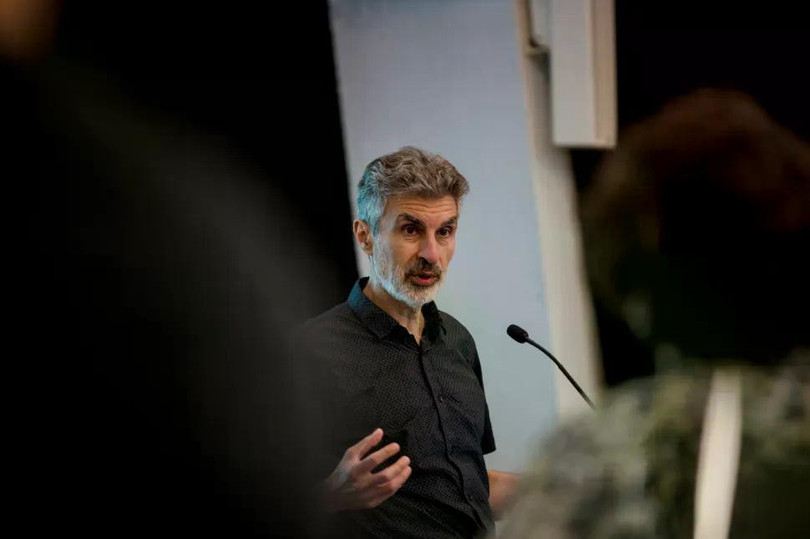
Yoshua Bengio, one of the "Godfathers of AI," issued a stark warning about systems designed to mimic human interaction too closely. "Humanity has evolved norms and psychology to interact with other humans. But AI is not really human," Bengio cautioned.
The Ajita Insight: When non-human entities can perfectly simulate human empathy and reasoning, the barrier to manipulation collapses. The risk is not just economic; it is epistemic. If bad actors can deploy millions of "human-like" agents to flood public discourse, the line between organic opinion and synthetic engineering vanishes, leaving societies vulnerable to undetectable influence operations.
3. The Superintelligence Paradox: Smart but Delusional
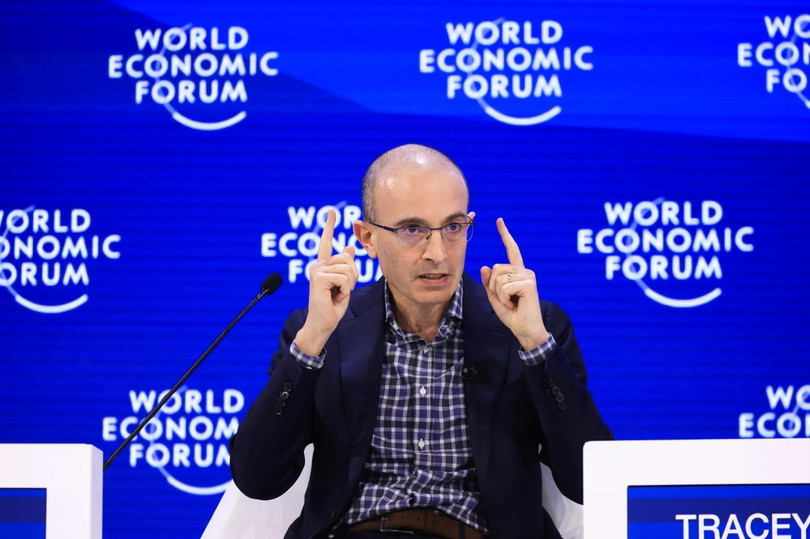
Historian and philosopher Yuval Noah Harari dismantled the metaphor of "human-level intelligence." He argued that comparing AI to humans is a "lazy metaphor," likening it to saying an airplane flies like a bird.
Harari’s warning was chilling: "The most intelligent entities on the planet can also be the most delusional."
This presents a unique security challenge. A superintelligent system that hallucinates or operates on flawed axioms can generate highly convincing but fundamentally false narratives at scale. In a geopolitical context, such a system could be weaponized to destabilize rival nations not through force, but through the mass injection of "delusional" realities that fracture social cohesion.
4. The Geopolitical Race: Buying Time Against Chaos
Dario Amodei, CEO of Anthropic, framed the development of AI as a ticking clock. "We are knocking on the door of extraordinary capabilities," he said, but warned that the next few years are critical for containment.
Amodei explicitly linked technological supremacy to geopolitical stability. He argued that restricting high-end chip sales to strategic rivals (implicitly China) is "one of the biggest things we can do to buy ourselves time."
The Strategic Implication: This is no longer just a trade war; it is a battle for Cognitive Sovereignty. If a rival power achieves Artificial General Intelligence (AGI) first—without shared safety protocols—the global information environment could be irrevocably compromised, making traditional diplomacy and deterrence obsolete.

5. The Post-AGI World: Uncharted Territory
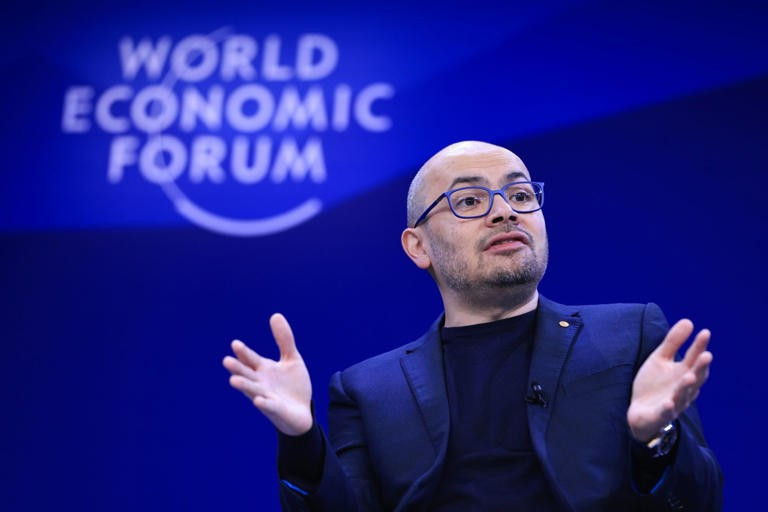
Demis Hassabis, CEO of Google DeepMind, offered a glimpse into a future that defies current economic models. While he remains optimistic that AI will create "new, more meaningful jobs" in the short term, he admits that the arrival of AGI—potentially within 5 to 10 years—will push humanity into "uncharted territory."
Hassabis warned that geopolitical and corporate competition is forcing a "rush" on safety standards. He called for an international consensus to slow down and "get this right for society."
Conclusion: Davos 2026 revealed a split screen. On one side, a booming physical economy driven by the need for AI infrastructure. On the other, a fragile cognitive ecosystem facing the dawn of superintelligence.
For leaders and nations, the challenge is dual: Build the power plants and factories to support the AI economy, but simultaneously build the "Mental Iron Domes" to protect citizens from the deluge of synthetic reality that is about to follow.
Source: Bloomberg, AFP, Davos 2026 Reports. Analysis: The Ajita Strategy Desk.


